Enquire Now: +91-84271-55511


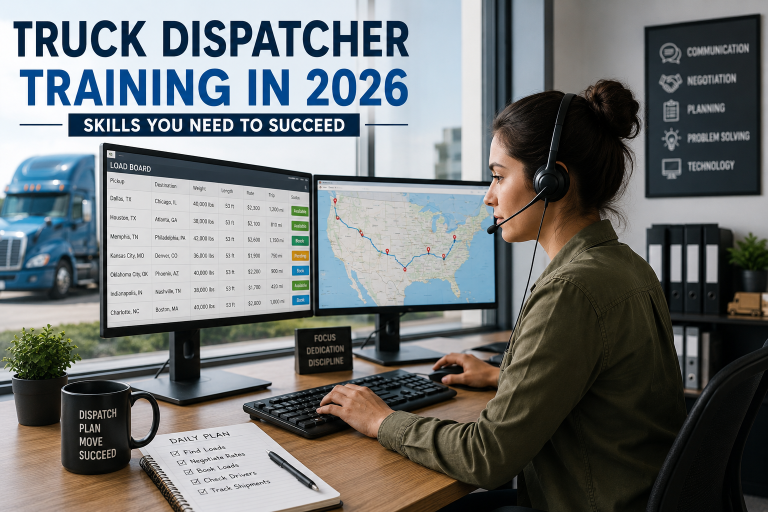
Strategic Truck Dispatching: A Complete Guide for Beginners
The trucking industry depends on good planning, communication, and timely decision-making. This is where strategic truck dispatching plays an important role. A skilled truck dispatcher does more than simply find loads for drivers. They help carriers choose the right freight, plan efficient routes, reduce empty miles, and improve overall truck profitability.
For anyone interested in building a career in US/Canada truck dispatching, understanding strategic dispatching can be an important step toward becoming a successful dispatcher.
What Is Strategic Truck Dispatching?
Strategic truck dispatching is the process of planning and managing a truck’s daily operations to improve efficiency and profitability.
Instead of accepting every available load, a strategic dispatcher looks at different factors before making a decision. These may include the load rate, mileage, pickup and delivery locations, fuel costs, market conditions, driver availability, and the possibility of finding another load after delivery.
The main goal is simple: keep the truck moving while making better business decisions.
Why Is Strategic Dispatching Important?
A truck can lose money even when it is constantly moving if loads are not selected carefully.
For example, a dispatcher may find a load that pays well but requires the truck to travel hundreds of empty miles to reach the pickup location. After considering fuel, tolls, and other operating costs, the load may not be as profitable as it first appeared.
Strategic dispatching helps avoid these situations by looking at the complete picture before booking a load.
Key benefits include:
- Better load selection
- Reduced empty miles
- Improved route planning
- Better rate negotiation
- Higher truck utilization
- Improved driver coordination
- More organized daily operations
- Better potential profitability
How Does Strategic Truck Dispatching Work?
A strategic dispatcher generally follows a process before booking and managing a load.
1. Check the Truck’s Current Location
The first step is knowing where the truck is, whether it is loaded or empty, and when it will become available.
This information helps the dispatcher search for loads in the right area.
2. Search for Suitable Loads
Dispatchers use load boards and other industry resources to find available freight.
However, finding a load is only the beginning. The dispatcher needs to compare different options and determine which load makes the most sense for the carrier.
3. Calculate the Numbers
A dispatcher should look beyond the advertised rate.
Important factors may include:
- Total miles
- Loaded miles
- Empty miles
- Rate per mile
- Fuel costs
- Tolls
- Pickup and delivery requirements
- Driver hours and availability
This helps the dispatcher make a more informed decision.
4. Negotiate the Freight Rate
Once a suitable load is identified, the dispatcher may communicate with the freight broker to negotiate the rate.
Good communication and knowledge of the market can help dispatchers negotiate more effectively.
5. Plan the Route
After booking the load, the dispatcher works with the driver to ensure the pickup and delivery schedule is practical.
Route planning can help reduce unnecessary miles and delays.
6. Track the Shipment
The dispatcher continues to communicate with the driver and monitor the shipment until delivery.
If there is a delay, traffic problem, breakdown, or appointment issue, the dispatcher may need to communicate with the broker and find a solution.
Strategic Dispatching vs. Basic Dispatching
There is an important difference between simply finding a load and strategically managing a truck.
| Basic Dispatching | Strategic Dispatching |
|---|---|
| Finds available loads | Compares multiple load options |
| Focuses mainly on getting a load | Looks at overall profitability |
| May accept the first suitable load | Evaluates rate, mileage and route |
| Books loads | Plans the truck’s next moves |
| Reacts to problems | Tries to prevent problems |
| Focuses on today’s load | Considers the next load and future positioning |
Strategic dispatching requires planning, communication, market knowledge, and good decision-making skills.
Skills Needed for Strategic Truck Dispatching
A successful truck dispatcher should develop several important skills.
Communication Skills
Dispatchers communicate with drivers, brokers, carriers, and sometimes shippers. Clear and professional communication is essential.
Negotiation Skills
Knowing how to negotiate freight rates can make a significant difference in dispatch operations.
Problem-Solving Skills
Trucking does not always go according to plan. A dispatcher needs to stay calm and find practical solutions when problems occur.
Load Planning
Understanding which loads work well together can help reduce empty miles and improve truck utilization.
Time Management
Dispatchers often manage multiple trucks, loads, appointments, and communications at the same time.
Example of Strategic Truck Dispatching
Imagine a truck is delivering a load to Dallas, Texas.
After delivery, the dispatcher finds two possible loads:
Load A:
Dallas → Atlanta
$2,000
Load B:
Dallas → Houston
$1,500
At first glance, Load A appears to be the better option because it pays more.
However, a strategic dispatcher would look at the mileage, fuel costs, route, market conditions, driver schedule, and opportunities for the next load before making a decision.
This is the difference between simply finding a load and strategically dispatching a truck.
How to Learn Strategic Truck Dispatching
Strategic truck dispatching is a skill that can be learned through a combination of industry knowledge, practical training, and real-world examples.
A good truck dispatch training program should teach more than just how to use load boards. Students should understand how to evaluate loads, communicate with brokers, negotiate rates, plan routes, reduce empty miles, and manage drivers.
Practical exercises and real dispatch scenarios can help beginners understand how dispatch decisions are made in the real trucking industry.
Start Your Truck Dispatching Career
Ready to build a career in the growing US trucking industry? Our Truck Dispatch Training Course is designed to help beginners learn the practical skills needed to work as a truck dispatcher.
Learn load searching, broker communication, rate negotiation, route planning, dispatch software, shipment tracking, and strategic truck dispatching through practical training.
Take the first step toward your truck dispatching career today.
👉 Join Our Truck Dispatch Training Course and Start Learning Today!
📞 Call us +91-84271-55511 today to learn more and enroll.