Enquire Now: +91-84271-55511


How to Become a Truck Dispatcher?
If you have a passion for the trucking and transportation industry, becoming a truck dispatcher can be a great way to build a rewarding career. As a dispatcher, you can use your communication, coordination, problem-solving, and organizational skills to help drivers, carriers, and fleets operate efficiently.
With the continued growth of the trucking and transportation industry, the demand for skilled and reliable truck dispatchers remains important. A professional dispatcher plays a key role in coordinating loads, communicating with drivers and brokers, planning routes, managing schedules, and helping ensure freight reaches its destination on time.
Truck dispatching is an essential part of the supply chain. Every successful delivery can impact businesses, customers, and communities that depend on the timely movement of goods.
In this guide, you’ll learn what it takes to become a successful truck dispatcher, including the essential skills, responsibilities, industry knowledge, and training needed to start and grow your career in truck dispatching.
What Does a Truck Dispatcher Do?
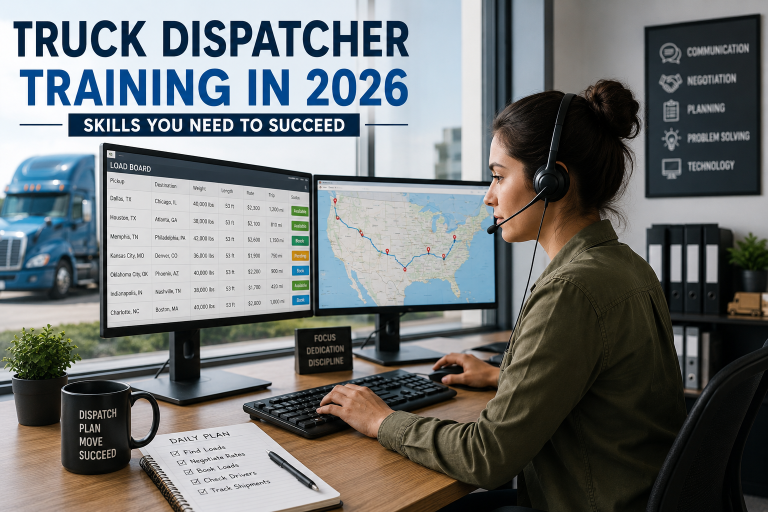
A truck dispatcher plays an important role in keeping transportation operations organized and running smoothly. They act as a communication link between truck drivers, clients, brokers, suppliers, and other parties involved in the movement of freight.
The day-to-day responsibilities of a truck dispatcher can vary depending on the company or type of freight being handled. However, their primary goal is to coordinate shipments, support drivers, and help ensure that cargo is picked up and delivered efficiently and on schedule.
Some of the key responsibilities of a truck dispatcher include:
- Communicating with drivers, clients, brokers, and suppliers to share important load, pickup, delivery, and scheduling information.
- Scheduling pickups and deliveries while coordinating timelines and monitoring the progress of active shipments.
- Tracking freight and vehicles to stay informed about shipment status and respond quickly to delays or unexpected changes.
- Maintaining accurate records and documentation, including load details, invoices, billing information, orders, and other transportation-related paperwork.
- Resolving freight and scheduling issues by communicating with the appropriate parties and helping find practical solutions.
- Planning and coordinating routes while providing drivers with relevant trip and delivery information.
- Using dispatch and transportation software to manage loads, track shipments, organize schedules, and improve communication.
A career in truck dispatching can also create opportunities for professional growth within the trucking and transportation industry. Depending on the company and role, truck dispatchers may work from an office or have opportunities for remote work. With the right truck dispatcher training, communication skills, industry knowledge, and practical experience, aspiring dispatchers can build a strong foundation for a successful career in the transportation industry.
Education and Skills Needed to Become a Successful Truck Dispatcher
If you’re planning to build a career in the trucking and transportation industry, developing the right knowledge and skills can help you stand out from other candidates. While some entry-level truck dispatcher positions may not require formal training beyond a high school diploma or equivalent, additional education, industry knowledge, and practical skills can improve your career opportunities.
Here are four important steps to help you become a successful truck dispatcher:
1. Complete a Truck Dispatcher Training Course
Although a formal truck dispatcher training course may not always be required, professional training can help you understand the fundamentals of the industry and prepare for real-world dispatching responsibilities.
A quality training program can introduce you to important topics such as:
- Load booking and coordination
- Communication with drivers, brokers, and customers
- Freight documentation and paperwork
- Route and schedule management
- Truck dispatch software and technology
- Basic knowledge of trucking operations and regulations
- Problem-solving and customer service
Completing a truck dispatcher course can also help you feel more confident during job applications and interviews.
2. Pursue Additional Education
Most truck dispatcher positions typically require a high school diploma or equivalent. However, additional education in areas such as business, communication, management, logistics, transportation, or accounting may help strengthen your professional skills and expand your career opportunities.
An associate’s or bachelor’s degree is not always necessary to start a career in truck dispatching, but it can be beneficial for individuals interested in advancing into management, logistics, operations, or other transportation-related roles.
3. Gain Knowledge and Experience in the Trucking Industry
Understanding how the trucking industry works is one of the most valuable advantages for an aspiring dispatcher. Practical experience can help you become familiar with freight operations, shipping processes, delivery schedules, and the challenges drivers face on the road.
Experience in areas such as trucking, logistics, freight, shipping, transportation, or customer service can provide a strong foundation for a truck dispatching career. It’s also important to develop an understanding of the transportation rules and regulations that apply to the type of operations you plan to support.
4. Develop Strong Technical and Interpersonal Skills
Successful truck dispatchers need a combination of technical knowledge and strong people skills. Since dispatchers communicate with drivers, customers, brokers, and other transportation professionals throughout the day, clear and professional communication is essential.
Some of the most important skills for a truck dispatcher include:
- Communication Skills – Clearly sharing information with drivers, brokers, and customers.
- Organization and Time Management – Managing multiple loads, schedules, and deadlines efficiently.
- Problem-Solving – Responding calmly and effectively to delays, schedule changes, and unexpected challenges.
- Customer Service – Building positive professional relationships and providing reliable support.
- Computer Skills – Using email, spreadsheets, dispatch platforms, GPS systems, and transportation software.
- Attention to Detail – Accurately managing load information, documents, schedules, and other important details.
By combining professional truck dispatcher training, industry knowledge, technical skills, and practical communication abilities, you can build a strong foundation for a successful and rewarding career in the trucking and transportation industry.
Average Truck Dispatcher Salary
The salary of a truck dispatcher in the United States can vary based on several factors, including location, experience, employer, job responsibilities, and the type of freight or transportation operation.
According to Indeed’s Dispatcher Salary Information, truck dispatchers and related dispatcher roles can earn different salaries depending on experience and location.
Entry-level dispatchers may start with a lower salary, while professionals with strong industry knowledge, communication skills, and experience in logistics and transportation may have opportunities to earn more. Compensation can also vary depending on whether the dispatcher works for a small trucking company, a large carrier, or in a specialized transportation operation.
A career in truck dispatching may also offer opportunities for professional growth. With experience, dispatchers can advance into roles related to fleet management, transportation operations, logistics coordination, or dispatch supervision, which may provide increased responsibilities and earning potential.
Start Your Truck Dispatching Career Today
Ready to build your career in the growing trucking and transportation industry? Our Truck Dispatcher Training program can help you develop the practical knowledge, communication skills, and industry understanding needed to get started.
Contact us today to learn more about our training program and upcoming classes.
📞 Call us at: +91-84271-55511
Take the first step toward your future in truck dispatching today!